

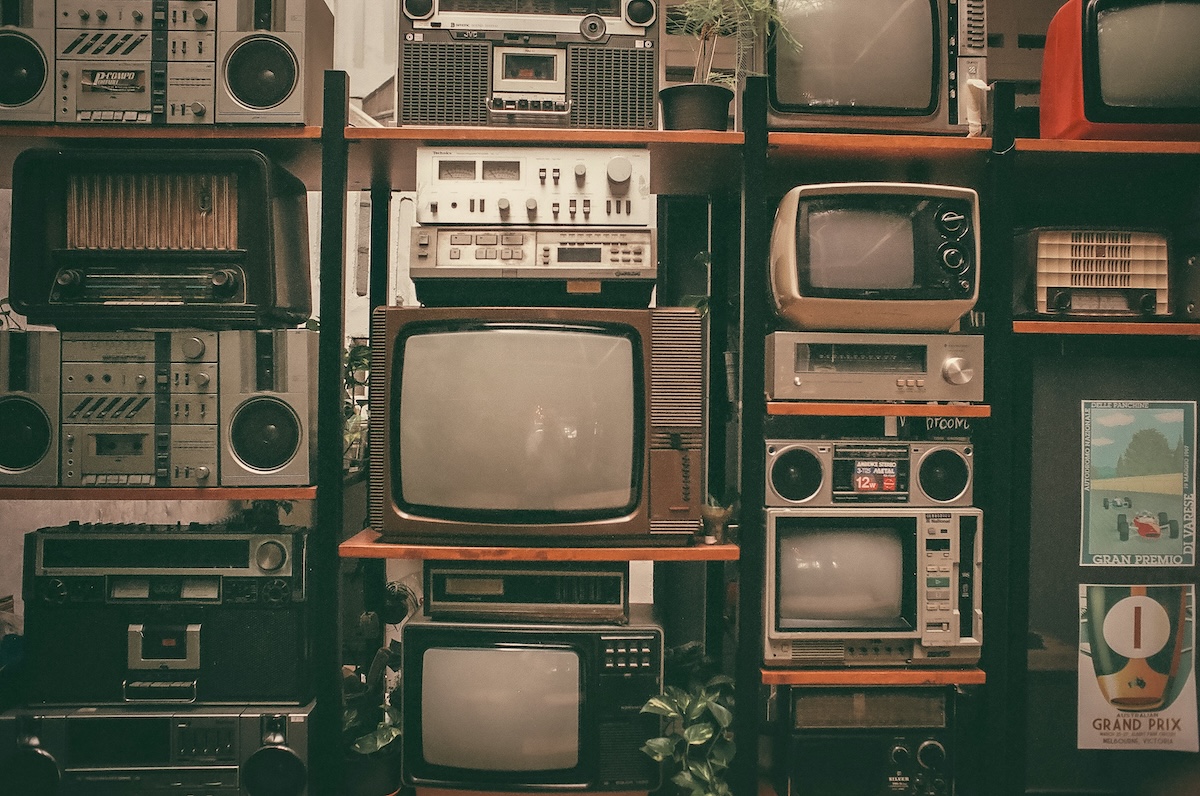
You are surrounded by creativity. How might the Creator God be in people’s creative expressions? Particularly, how might he be in the media—the shows, books, podcasts, music, news broadcasts, and more—that you regularly consume?
Why think about media?
Media plays a huge part in shaping how you think about the world. It’s how we communicate our ideas to other people and make them real. But how often do you engage deeply with the media you consume? If we don’t earnestly engage with media, we run the risk of missing out on a huge way of connecting with:
Our neighbours: To live intentionally for Christ, you should also know why the gospel matters to the people around you too. You can’t do this if you aren’t listening to others where they’re at and paying attention to others’ needs.
Ourselves: As Christians, our identities come from God, but the world has many competing voices. Awareness of the media we consume helps us to better identify what is shaping us and where it comes from.
Created beauty: As God created us to create, we must also see the value in what is created by others. Encountering media helps us see how experiences across the world are all a part of God’s bigger story to personally love every one of us and bring us back to him.
How to use this guide
Pick a piece of media you’d like to investigate further, new or old. It could be a movie, TV show, book, song, performance, podcast, video game, visual art, etc. To keep things easy, you can narrow longer works by looking at just one episode of a show. Below you’ll find 20 emotional, spiritual, and technical questions to help you better understand a piece of media you’re curious about.
This guide should take you around 40 minutes to fill out. If you don’t know how to answer a question, make note of it and move onto the next. Look up information if you need to. But generally there are no right or wrong answers. These questions are here to help you think more deeply about the media you consume, and to understand our hearts and the hearts of those around us.
You can complete this reflection alone, or use it with others. Reflecting on media is a great springboard for discussions, or for creating something yourself. Save this resource so you can continue reflecting on media in the future.
🔗 Download a digital version of the media guide to print and fill out on your own.
_______________________________________________
Title of media:
Who it’s created by:
Type of media:
Emotional response: How do I feel?
When you leave a movie or finish a book, the emotions it stirs are what you remember best. Your emotions act as a way to gauge how that media is affecting you, and can clue you into how the Holy Spirit is working in your life. Use these questions to assess what you’re feeling and find an entry point for reflection.
What were my reactions to this media? What am I cheering on? What made me uncomfortable or upset?
How did my emotions change before, during, and after? What caused this change?
What might the Holy Spirit be sharing with me/pointing me to?
Themes and messages: What is this saying?
You probably walk away from a piece of media with a sense of what it wants to tell you. Themes and messages aren’t often explicitly said out loud—most of the time they build over the course of a story. What might a piece of media want to leave you with? Here are a few questions to guide you as you sort out the message of a work.
What problems are presented? Is there a resolution?
What/who is presented as good news? What brings hope? (e.g. person, thing, event)
What themes do you notice? (could be a single word like “family” or “anxiety” but could also be more complex like “how screens affect us” or “what it means to be human”)
Does this story reflect God’s kingdom in any way? (beauty, unity, restoration, freedom) Why or why not?
Form and style: What does it look like?
Marshall McLuhan famously said that “the medium is the message,” which means that the properties of a form tell us more about what is being said than the content itself. For example, you probably respond differently when someone talks with you in person vs. through text.
These questions will help you think more about the container for the content.
What genre is this piece of media? What style does it have?
(e.g. fiction/nonfiction, romance/horror/comedy/sci-fi/fantasy, pop/folk/classical, AAA/indie, live action/animation, abstract/impressionist, 2D/3D, musical/Shakespeare)
How did I hear about this media? (e.g. friends/family, social media, school, work, online search, etc.) Did I experience it with others or alone?
How is this media’s form influencing how I interact with it? Does this impact its meaning?
Context and beliefs: What views are presented?
Media is created from a wide range of perspectives, and it is important to not assign beliefs to media if they do not express them. Consider the perspectives offered by the media you chose, and compare them to your own. Here are some questions to help you discern point of view.
When was this made? Is it responding to something? (e.g. historical, political, cultural, social, economic realities)
Who is the target audience? Am I part of this audience?
Does this media reference religion or spirituality? In what way?
How does this media point me towards God in some way? (e.g. helps me understand his promises, raises questions that I want him to answer)
Sharing: What do others think?
Media is always in conversation with the people who interact with it. It doesn’t exist in a vacuum! Whether it’s recommending a movie, asking for different perspectives, or for a group assignment, talking about media is a passing of the torch, sharing with other people what stands out to you.
How have I talked about this piece of media to others? What do I highlight about it? Is this different from how other people approach it?
Is there a person/group of people I’d like to talk with about this media? (faith-based or not)
Do other people know about this? Where is it well known or unknown?
Takeaways
While deeply reflecting on a piece of media isn’t easy, it’s a muscle that you can exercise and improve over time. As you reflected on these questions, what did you find most useful? Did you discover something new about the piece of media you chose? What truths became clearer (or less clear)? Take some time to reflect on your takeaways.
Now that I’ve thought deeply, do I understand my feelings/the content better? What would help me understand?
Is there anything I want to investigate further?
Where is this media incentivizing me to pray/pursue God? Am I being invited to start or stop something?
Do you have a question about this guide?
Fill out the form below to connect with our volunteer Victoria who created this guide:
Related Articles


